David Byrne Reflects on Talking Heads’ Punk-Era Tours and the Evolution of Live Performance
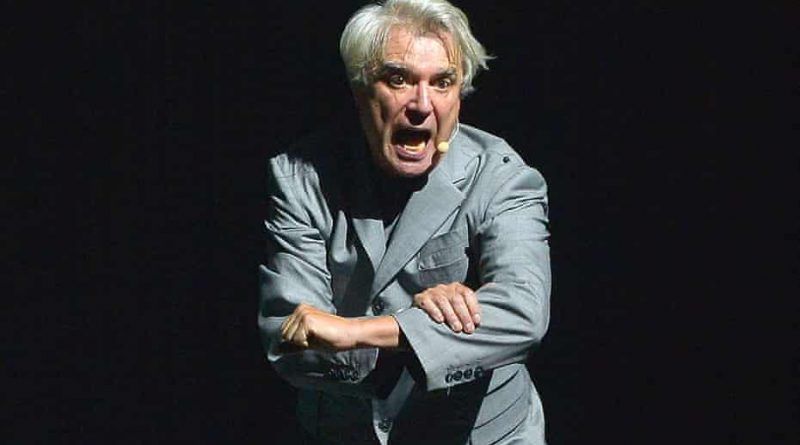
“‘Suddenly, the whole band were liberated to move about, which democratised the concert experience for the musicians and the audience,’ David Byrne said.”
David Byrne has reflected on Talking Heads’ early experiences during the rise of the British punk movement and explained how decades of experimentation have shaped his approach to live performance, as his “American Utopia” concert film reaches cinemas.
Speaking in response to audience questions, Byrne recalled the band’s 1977 UK tour alongside the Ramones, describing it as a period when audiences were still discovering emerging acts without preconceived opinions.
The tour began at Eric’s Club in Liverpool and came at a time when punk music was rapidly gaining prominence in Britain. Byrne said the atmosphere allowed audiences to approach both bands with curiosity despite their contrasting musical styles.
“There was something really great about that tour because other than maybe a few singles the audience had never seen us, so there was a lot of curiosity and openness to us and Ramones, as different as we were,” Byrne said.
He noted that audience attitudes changed as bands became more established, with listeners increasingly forming strong preferences. Byrne also recalled one performance at London’s Roundhouse where members of the audience spat at performers, behaviour that had become associated with parts of the punk scene.
According to Byrne, the Ramones received the majority of that treatment and were less accepting of it than some audience members expected.
“I remember we did a show at the Roundhouse where somebody in the audience was gobbing on the bands. Ramones got more of that than we did, but at least they had leather jackets. We didn’t,” he said.
Beyond his memories of the punk era, Byrne discussed the philosophy that has influenced his live performances since Talking Heads’ acclaimed “Stop Making Sense” tour.
He said his objective has been to remove the physical limitations traditionally associated with rock concerts and to create performances that allow musicians greater freedom of movement.
Byrne explained that wireless guitars provided an early opportunity to rethink stage design. Later collaborations, including performances with St. Vincent, further encouraged him to explore more mobile concert formats after observing brass musicians who had experience performing in marching bands.
His next challenge involved redesigning the role of percussion. Byrne said he drew inspiration from American football drumlines and samba schools in Rio de Janeiro before consulting longtime percussionist Mauro Refosco about dividing a conventional drum kit into portable components.
Refosco estimated that six percussionists would be required to recreate the functions of a standard drum set. Byrne said he accepted the additional cost in order to realise the concept.
He also identified technology as a key factor in expanding the idea. Byrne said a Hungarian company had developed a self-powered MIDI keyboard system that enabled keyboard players to move freely across the stage.
The combination of portable instruments and redesigned staging transformed the dynamics of the performance, Byrne said.
“Suddenly, the whole band were liberated to move about, which democratised the concert experience for the musicians and the audience, who get to understand what each one does,” he said.
The approach has become one of the defining characteristics of Byrne’s live productions, reflecting an emphasis on mobility, collaboration and audience engagement alongside musical performance.